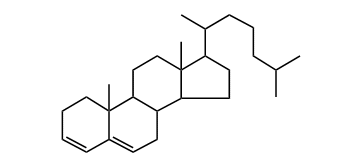
| Cholesta-3,5-diene |
| Formula: | C27H44 |
| CAS#: | 747-90-0 |
| MW: | 368.64 |
[MS]
[ Kovats ]
|
|
Species utilize Cholesta-3,5-diene in its chemical communication system
| Squamata, Lacertidae | |
| Gallotia simonyi |
P
¦Category of the chemical signal
| A - | Attractant |
| Al - | Allomone |
| K - | Kairomone |
| P - | Pheromone |
| Sy - | Synomone¦ |
|
¦(*) indicates that compound is active¦
|
El Hierro giant lizard |
| |
| Carnivora, Ursidae, Ailurinae | |
| Ailuropoda melanoleuca |
P
¦Category of the chemical signal
| A - | Attractant |
| Al - | Allomone |
| K - | Kairomone |
| P - | Pheromone |
| Sy - | Synomone¦ |
|
¦(*) indicates that compound is active¦
|
Giant panda |
| |
| Squamata, Amphisbaenidae, Amphisbaeninae | |
| Blanus cinereus |
P
¦Category of the chemical signal
| A - | Attractant |
| Al - | Allomone |
| K - | Kairomone |
| P - | Pheromone |
| Sy - | Synomone¦ |
|
¦(*) indicates that compound is active¦
|
Iberian worm lizard |
| |
| Squamata, Boidae, Sanziniinae | |
| Acrantophis dumerili |
P
¦Category of the chemical signal
| A - | Attractant |
| Al - | Allomone |
| K - | Kairomone |
| P - | Pheromone |
| Sy - | Synomone¦ |
|
¦(*) indicates that compound is active¦
|
Dumeril's boa |
| |
| Squamata, Gekkonidae, Gekkoninae | |
| Cyrtopodion scabrum |
P
¦Category of the chemical signal
| A - | Attractant |
| Al - | Allomone |
| K - | Kairomone |
| P - | Pheromone |
| Sy - | Synomone¦ |
|
¦(*) indicates that compound is active¦
|
Rough-tailed gecko |
| |
| Artiodactyla, Camelidae, Camelinae, Camelini | |
| Camelus bactrianus |
P
¦Category of the chemical signal
| A - | Attractant |
| Al - | Allomone |
| K - | Kairomone |
| P - | Pheromone |
| Sy - | Synomone¦ |
|
¦(*) indicates that compound is active¦
|
Bactrian camel |
| |
| Carnivora, Canidae, Caninae, Canini | |
| Canis lupus signatus |
P
¦Category of the chemical signal
| A - | Attractant |
| Al - | Allomone |
| K - | Kairomone |
| P - | Pheromone |
| Sy - | Synomone¦ |
|
¦(*) indicates that compound is active¦
|
Iberian wolf |
| |
| Coleoptera, Scarabaeidae, Melolonthinae, Melolonthini | |
| Phyllophaga opaca |
P
¦Category of the chemical signal
| A - | Attractant |
| Al - | Allomone |
| K - | Kairomone |
| P - | Pheromone |
| Sy - | Synomone¦ |
|
¦(*) indicates that compound is active¦
|
|
| |
| Lepidoptera, Nymphalidae, Heliconiinae, Heliconiini | |
| Heliconius atthis |
P
¦Category of the chemical signal
| A - | Attractant |
| Al - | Allomone |
| K - | Kairomone |
| P - | Pheromone |
| Sy - | Synomone¦ |
|
¦(*) indicates that compound is active¦
|
Atthis longwing |
| Heliconius cydno |
P
¦Category of the chemical signal
| A - | Attractant |
| Al - | Allomone |
| K - | Kairomone |
| P - | Pheromone |
| Sy - | Synomone¦ |
|
¦(*) indicates that compound is active¦
|
Cydno longwing |
| Heliconius eleuchia |
P
¦Category of the chemical signal
| A - | Attractant |
| Al - | Allomone |
| K - | Kairomone |
| P - | Pheromone |
| Sy - | Synomone¦ |
|
¦(*) indicates that compound is active¦
|
White-edged longwing |
| Heliconius elevatus |
P
¦Category of the chemical signal
| A - | Attractant |
| Al - | Allomone |
| K - | Kairomone |
| P - | Pheromone |
| Sy - | Synomone¦ |
|
¦(*) indicates that compound is active¦
|
|
| Heliconius erato |
P
¦Category of the chemical signal
| A - | Attractant |
| Al - | Allomone |
| K - | Kairomone |
| P - | Pheromone |
| Sy - | Synomone¦ |
|
¦(*) indicates that compound is active¦
|
Red postman |
| Heliconius melpomene |
P
¦Category of the chemical signal
| A - | Attractant |
| Al - | Allomone |
| K - | Kairomone |
| P - | Pheromone |
| Sy - | Synomone¦ |
|
¦(*) indicates that compound is active¦
|
Common postman |
| Heliconius timareta |
P
¦Category of the chemical signal
| A - | Attractant |
| Al - | Allomone |
| K - | Kairomone |
| P - | Pheromone |
| Sy - | Synomone¦ |
|
¦(*) indicates that compound is active¦
|
Timareta longwing |
| |
| Squamata, Gekkonidae, Gekkoninae, Gekkonini | |
| Hemidactylus flaviviridis |
P
¦Category of the chemical signal
| A - | Attractant |
| Al - | Allomone |
| K - | Kairomone |
| P - | Pheromone |
| Sy - | Synomone¦ |
|
¦(*) indicates that compound is active¦
|
Yellow-bellied house gecko |
| Hemidactylus turcicus |
P
¦Category of the chemical signal
| A - | Attractant |
| Al - | Allomone |
| K - | Kairomone |
| P - | Pheromone |
| Sy - | Synomone¦ |
|
¦(*) indicates that compound is active¦
|
Mediterranean house gecko |
| |
| Squamata, Lacertidae, Lacertinae, Lacertini | |
| Lacerta monticola |
P
¦Category of the chemical signal
| A - | Attractant |
| Al - | Allomone |
| K - | Kairomone |
| P - | Pheromone |
| Sy - | Synomone¦ |
|
¦(*) indicates that compound is active¦
|
Iberian rock lizard |
| Podarcis lilfordi |
P
¦Category of the chemical signal
| A - | Attractant |
| Al - | Allomone |
| K - | Kairomone |
| P - | Pheromone |
| Sy - | Synomone¦ |
|
¦(*) indicates that compound is active¦
|
Balearic lizard |
| Podarcis muralis |
P
¦Category of the chemical signal
| A - | Attractant |
| Al - | Allomone |
| K - | Kairomone |
| P - | Pheromone |
| Sy - | Synomone¦ |
|
¦(*) indicates that compound is active¦
|
Common wall lizard |
| |
|