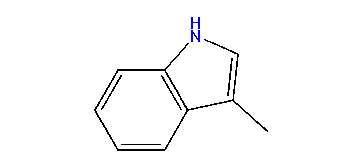
| Coleoptera, Scarabaeidae, Scarabaeinae | |
| Anomiopus sp |
A
¦Category of the chemical signal
| A - | Attractant |
| Al - | Allomone |
| K - | Kairomone |
| P - | Pheromone |
| Sy - | Synomone¦ |
|
¦(*) indicates that compound is active¦
|
|
| |
| Diptera, Chloropidae, Oscinellinae | |
| Hippelates collusor |
A
¦Category of the chemical signal
| A - | Attractant |
| Al - | Allomone |
| K - | Kairomone |
| P - | Pheromone |
| Sy - | Synomone¦ |
|
¦(*) indicates that compound is active¦
|
Eye gnat |
| |
| Diptera, Culicidae, Culicinae | |
| Toxorhynchites amboinensis |
K
¦Category of the chemical signal
| A - | Attractant |
| Al - | Allomone |
| K - | Kairomone |
| P - | Pheromone |
| Sy - | Synomone¦ |
|
¦(*) indicates that compound is active¦
|
|
| Toxorhynchites moctezuma |
K
¦Category of the chemical signal
| A - | Attractant |
| Al - | Allomone |
| K - | Kairomone |
| P - | Pheromone |
| Sy - | Synomone¦ |
|
¦(*) indicates that compound is active¦
|
|
| |
| Trichoptera, Limnephilidae, Limnephilinae | |
| Pycnopsyche scabripennis |
Al
¦Category of the chemical signal
| A - | Attractant |
| Al - | Allomone |
| K - | Kairomone |
| P - | Pheromone |
| Sy - | Synomone¦ |
|
¦(*) indicates that compound is active¦
|
Giant red sedge |
| |
| Artiodactyla, Giraffidae, Giraffinae, Giraffini | |
| Giraffa camelopardalis reticulata |
P
¦Category of the chemical signal
| A - | Attractant |
| Al - | Allomone |
| K - | Kairomone |
| P - | Pheromone |
| Sy - | Synomone¦ |
|
¦(*) indicates that compound is active¦
|
Reticulated giraffe |
| |
| Coleoptera, Geotrupidae, Geotrupinae, Geotrupini | |
| Geotrupes spiniger |
A
¦Category of the chemical signal
| A - | Attractant |
| Al - | Allomone |
| K - | Kairomone |
| P - | Pheromone |
| Sy - | Synomone¦ |
|
¦(*) indicates that compound is active¦
|
Dumbledor beetle |
| |
| Coleoptera, Scarabaeidae, Aphodiinae, Aphodiini | |
| Aphodius lividus |
A
¦Category of the chemical signal
| A - | Attractant |
| Al - | Allomone |
| K - | Kairomone |
| P - | Pheromone |
| Sy - | Synomone¦ |
|
¦(*) indicates that compound is active¦
|
|
| Aphodius sp |
A
¦Category of the chemical signal
| A - | Attractant |
| Al - | Allomone |
| K - | Kairomone |
| P - | Pheromone |
| Sy - | Synomone¦ |
|
¦(*) indicates that compound is active¦
|
|
| Aphodius tasmaniae |
A
¦Category of the chemical signal
| A - | Attractant |
| Al - | Allomone |
| K - | Kairomone |
| P - | Pheromone |
| Sy - | Synomone¦ |
|
¦(*) indicates that compound is active¦
|
Pasture cockchafer |
| |
| Coleoptera, Scarabaeidae, Scarabaeinae, Ateuchini | |
| Eutrichillum hysterix |
A
¦Category of the chemical signal
| A - | Attractant |
| Al - | Allomone |
| K - | Kairomone |
| P - | Pheromone |
| Sy - | Synomone¦ |
|
¦(*) indicates that compound is active¦
|
|
| Nunoidium argentinum |
A
¦Category of the chemical signal
| A - | Attractant |
| Al - | Allomone |
| K - | Kairomone |
| P - | Pheromone |
| Sy - | Synomone¦ |
|
¦(*) indicates that compound is active¦
|
|
| Trichillum sp |
A
¦Category of the chemical signal
| A - | Attractant |
| Al - | Allomone |
| K - | Kairomone |
| P - | Pheromone |
| Sy - | Synomone¦ |
|
¦(*) indicates that compound is active¦
|
|
| |
| Coleoptera, Scarabaeidae, Scarabaeinae, Canthonini | |
| Canthon lituratus |
A
¦Category of the chemical signal
| A - | Attractant |
| Al - | Allomone |
| K - | Kairomone |
| P - | Pheromone |
| Sy - | Synomone¦ |
|
¦(*) indicates that compound is active¦
|
|
| Canthon ornatus bipunctatus |
A
¦Category of the chemical signal
| A - | Attractant |
| Al - | Allomone |
| K - | Kairomone |
| P - | Pheromone |
| Sy - | Synomone¦ |
|
¦(*) indicates that compound is active¦
|
|
| Malagoniella argentina |
A
¦Category of the chemical signal
| A - | Attractant |
| Al - | Allomone |
| K - | Kairomone |
| P - | Pheromone |
| Sy - | Synomone¦ |
|
¦(*) indicates that compound is active¦
|
|
| Scybalophagus plicatipennis |
A
¦Category of the chemical signal
| A - | Attractant |
| Al - | Allomone |
| K - | Kairomone |
| P - | Pheromone |
| Sy - | Synomone¦ |
|
¦(*) indicates that compound is active¦
|
|
| |
| Coleoptera, Scarabaeidae, Scarabaeinae, Coprini | |
| Canthidium sp |
A
¦Category of the chemical signal
| A - | Attractant |
| Al - | Allomone |
| K - | Kairomone |
| P - | Pheromone |
| Sy - | Synomone¦ |
|
¦(*) indicates that compound is active¦
|
|
| Ontherus appendiculatus |
A
¦Category of the chemical signal
| A - | Attractant |
| Al - | Allomone |
| K - | Kairomone |
| P - | Pheromone |
| Sy - | Synomone¦ |
|
¦(*) indicates that compound is active¦
|
|
| |
| Coleoptera, Scarabaeidae, Scarabaeinae, Eucraniini | |
| Eucranium arachnoides |
A
¦Category of the chemical signal
| A - | Attractant |
| Al - | Allomone |
| K - | Kairomone |
| P - | Pheromone |
| Sy - | Synomone¦ |
|
¦(*) indicates that compound is active¦
|
|
| |
| Coleoptera, Scarabaeidae, Scarabaeinae, Oniticellini | |
| Euoniticellus fulvus |
A
¦Category of the chemical signal
| A - | Attractant |
| Al - | Allomone |
| K - | Kairomone |
| P - | Pheromone |
| Sy - | Synomone¦ |
|
¦(*) indicates that compound is active¦
|
|
| |
| Coleoptera, Scarabaeidae, Scarabaeinae, Onthophagini | |
| Onthophagus furcatus |
A
¦Category of the chemical signal
| A - | Attractant |
| Al - | Allomone |
| K - | Kairomone |
| P - | Pheromone |
| Sy - | Synomone¦ |
|
¦(*) indicates that compound is active¦
|
|
| Onthophagus hirculus |
A
¦Category of the chemical signal
| A - | Attractant |
| Al - | Allomone |
| K - | Kairomone |
| P - | Pheromone |
| Sy - | Synomone¦ |
|
¦(*) indicates that compound is active¦
|
|
| Onthophagus ruficapillus |
A
¦Category of the chemical signal
| A - | Attractant |
| Al - | Allomone |
| K - | Kairomone |
| P - | Pheromone |
| Sy - | Synomone¦ |
|
¦(*) indicates that compound is active¦
|
|
| |
| Coleoptera, Scarabaeidae, Scarabaeinae, Phanaeini | |
| Sulcophanaeus imperator |
A
¦Category of the chemical signal
| A - | Attractant |
| Al - | Allomone |
| K - | Kairomone |
| P - | Pheromone |
| Sy - | Synomone¦ |
|
¦(*) indicates that compound is active¦
|
|
| Sulcophanaeus menelas |
A
¦Category of the chemical signal
| A - | Attractant |
| Al - | Allomone |
| K - | Kairomone |
| P - | Pheromone |
| Sy - | Synomone¦ |
|
¦(*) indicates that compound is active¦
|
|
| |
| Coleoptera, Scarabaeidae, Scarabaeinae, Scarabaeini | |
| Kheper bonellii |
P
¦Category of the chemical signal
| A - | Attractant |
| Al - | Allomone |
| K - | Kairomone |
| P - | Pheromone |
| Sy - | Synomone¦ |
|
¦(*) indicates that compound is active¦
|
|
| Kheper lamarcki |
P
¦Category of the chemical signal
| A - | Attractant |
| Al - | Allomone |
| K - | Kairomone |
| P - | Pheromone |
| Sy - | Synomone¦ |
|
¦(*) indicates that compound is active¦
|
Dung beetle |
| Kheper nigroaeneus |
P
¦Category of the chemical signal
| A - | Attractant |
| Al - | Allomone |
| K - | Kairomone |
| P - | Pheromone |
| Sy - | Synomone¦ |
|
¦(*) indicates that compound is active¦
|
|
| Kheper subaeneus |
P
¦Category of the chemical signal
| A - | Attractant |
| Al - | Allomone |
| K - | Kairomone |
| P - | Pheromone |
| Sy - | Synomone¦ |
|
¦(*) indicates that compound is active¦
|
|
| |
| Diptera, Culicidae, Culicinae, Culicini | |
| Culex quinquefasciatus |
A
¦Category of the chemical signal
| A - | Attractant |
| Al - | Allomone |
| K - | Kairomone |
| P - | Pheromone |
| Sy - | Synomone¦ |
|
¦(*) indicates that compound is active¦
|
House mosquito |
| Culex quinquefasciatus |
K
¦Category of the chemical signal
| A - | Attractant |
| Al - | Allomone |
| K - | Kairomone |
| P - | Pheromone |
| Sy - | Synomone¦ |
|
¦(*) indicates that compound is active¦
|
House mosquito |
| Culex tarsalis |
K
¦Category of the chemical signal
| A - | Attractant |
| Al - | Allomone |
| K - | Kairomone |
| P - | Pheromone |
| Sy - | Synomone¦ |
|
¦(*) indicates that compound is active¦
|
|
| |
| Diptera, Muscidae, Muscinae, Muscini | |
| Musca autumnalis |
A
¦Category of the chemical signal
| A - | Attractant |
| Al - | Allomone |
| K - | Kairomone |
| P - | Pheromone |
| Sy - | Synomone¦ |
|
¦(*) indicates that compound is active¦
|
Face fly |
| |
| Diptera, Sarcophagidae, Paramacronychiinae, Paramacronychiini | |
| Wohlfahrtia magnifica |
A
¦Category of the chemical signal
| A - | Attractant |
| Al - | Allomone |
| K - | Kairomone |
| P - | Pheromone |
| Sy - | Synomone¦ |
|
¦(*) indicates that compound is active¦
|
Spotted flesh fly |
| |
| Hymenoptera, Apidae, Apinae, Euglossini | |
| Euglossa despecta |
A
¦Category of the chemical signal
| A - | Attractant |
| Al - | Allomone |
| K - | Kairomone |
| P - | Pheromone |
| Sy - | Synomone¦ |
|
¦(*) indicates that compound is active¦
|
|
| Euglossa fimbriata |
A
¦Category of the chemical signal
| A - | Attractant |
| Al - | Allomone |
| K - | Kairomone |
| P - | Pheromone |
| Sy - | Synomone¦ |
|
¦(*) indicates that compound is active¦
|
|
| Euglossa pleosticta |
A
¦Category of the chemical signal
| A - | Attractant |
| Al - | Allomone |
| K - | Kairomone |
| P - | Pheromone |
| Sy - | Synomone¦ |
|
¦(*) indicates that compound is active¦
|
|
| Euglossa purpurea |
A
¦Category of the chemical signal
| A - | Attractant |
| Al - | Allomone |
| K - | Kairomone |
| P - | Pheromone |
| Sy - | Synomone¦ |
|
¦(*) indicates that compound is active¦
|
|
| Euglossa securigera |
A
¦Category of the chemical signal
| A - | Attractant |
| Al - | Allomone |
| K - | Kairomone |
| P - | Pheromone |
| Sy - | Synomone¦ |
|
¦(*) indicates that compound is active¦
|
|
| Euglossa truncata |
A
¦Category of the chemical signal
| A - | Attractant |
| Al - | Allomone |
| K - | Kairomone |
| P - | Pheromone |
| Sy - | Synomone¦ |
|
¦(*) indicates that compound is active¦
|
|
| Eulaema cingulata |
A
¦Category of the chemical signal
| A - | Attractant |
| Al - | Allomone |
| K - | Kairomone |
| P - | Pheromone |
| Sy - | Synomone¦ |
|
¦(*) indicates that compound is active¦
|
|
| Eulaema nigrita |
A
¦Category of the chemical signal
| A - | Attractant |
| Al - | Allomone |
| K - | Kairomone |
| P - | Pheromone |
| Sy - | Synomone¦ |
|
¦(*) indicates that compound is active¦
|
|
| |
| Hymenoptera, Apidae, Meliponinae, Meliponini | |
| Melipona interrupta triplaridis |
P
¦Category of the chemical signal
| A - | Attractant |
| Al - | Allomone |
| K - | Kairomone |
| P - | Pheromone |
| Sy - | Synomone¦ |
|
¦(*) indicates that compound is active¦
|
|
| |
| Hymenoptera, Bethylidae, Epyrinae, Cephalonomiini | |
| Cephalonomia gallicola |
P
¦Category of the chemical signal
| A - | Attractant |
| Al - | Allomone |
| K - | Kairomone |
| P - | Pheromone |
| Sy - | Synomone¦ |
|
¦(*) indicates that compound is active¦
|
|
| Cephalonomia stephanoderis |
P
¦Category of the chemical signal
| A - | Attractant |
| Al - | Allomone |
| K - | Kairomone |
| P - | Pheromone |
| Sy - | Synomone¦ |
|
¦(*) indicates that compound is active¦
|
|
| |
| Hymenoptera, Formicidae, Cerapachyinae, Cerapachyini | |
| Cerapachys jacobsoni |
P
¦Category of the chemical signal
| A - | Attractant |
| Al - | Allomone |
| K - | Kairomone |
| P - | Pheromone |
| Sy - | Synomone¦ |
|
¦(*) indicates that compound is active¦
|
|
| |
| Hymenoptera, Formicidae, Formicinae, Lasiini | |
| Acanthomyops claviger |
P
¦Category of the chemical signal
| A - | Attractant |
| Al - | Allomone |
| K - | Kairomone |
| P - | Pheromone |
| Sy - | Synomone¦ |
|
¦(*) indicates that compound is active¦
|
|
| Lasius alienus |
P
¦Category of the chemical signal
| A - | Attractant |
| Al - | Allomone |
| K - | Kairomone |
| P - | Pheromone |
| Sy - | Synomone¦ |
|
¦(*) indicates that compound is active¦
|
Cornfield ant |
| Lasius neoniger |
P
¦Category of the chemical signal
| A - | Attractant |
| Al - | Allomone |
| K - | Kairomone |
| P - | Pheromone |
| Sy - | Synomone¦ |
|
¦(*) indicates that compound is active¦
|
Turfgrass ant |
| |
| Hymenoptera, Formicidae, Leptanillinae, Leptanillini | |
| Leptanilla sp |
P
¦Category of the chemical signal
| A - | Attractant |
| Al - | Allomone |
| K - | Kairomone |
| P - | Pheromone |
| Sy - | Synomone¦ |
|
¦(*) indicates that compound is active¦
|
|
| |
| Hymenoptera, Formicidae, Myrmicinae, Attini | |
| Acromyrmex coronatus |
P
¦Category of the chemical signal
| A - | Attractant |
| Al - | Allomone |
| K - | Kairomone |
| P - | Pheromone |
| Sy - | Synomone¦ |
|
¦(*) indicates that compound is active¦
|
|
| Apterostigma pilosum |
P
¦Category of the chemical signal
| A - | Attractant |
| Al - | Allomone |
| K - | Kairomone |
| P - | Pheromone |
| Sy - | Synomone¦ |
|
¦(*) indicates that compound is active¦
|
|
| Atta cephalotes |
P
¦Category of the chemical signal
| A - | Attractant |
| Al - | Allomone |
| K - | Kairomone |
| P - | Pheromone |
| Sy - | Synomone¦ |
|
¦(*) indicates that compound is active¦
|
Forest bachac |
| Atta laevigata |
P
¦Category of the chemical signal
| A - | Attractant |
| Al - | Allomone |
| K - | Kairomone |
| P - | Pheromone |
| Sy - | Synomone¦ |
|
¦(*) indicates that compound is active¦
|
Caribbean pine leaf cutting ant |
| Mycetarotes parallelus |
P
¦Category of the chemical signal
| A - | Attractant |
| Al - | Allomone |
| K - | Kairomone |
| P - | Pheromone |
| Sy - | Synomone¦ |
|
¦(*) indicates that compound is active¦
|
|
| Trachymyrmex fuscus |
P
¦Category of the chemical signal
| A - | Attractant |
| Al - | Allomone |
| K - | Kairomone |
| P - | Pheromone |
| Sy - | Synomone¦ |
|
¦(*) indicates that compound is active¦
|
|
| |
| Hymenoptera, Formicidae, Myrmicinae, Pheidolini | |
| Pheidole fallax |
Al
¦Category of the chemical signal
| A - | Attractant |
| Al - | Allomone |
| K - | Kairomone |
| P - | Pheromone |
| Sy - | Synomone¦ |
|
¦(*) indicates that compound is active¦
|
|
| |
| Neuroptera, Chrysopidae, Chrysopinae, Chrysopini | |
| Ceraeochrysa cubana |
P
¦Category of the chemical signal
| A - | Attractant |
| Al - | Allomone |
| K - | Kairomone |
| P - | Pheromone |
| Sy - | Synomone¦ |
|
¦(*) indicates that compound is active¦
|
|
| Chrysopa incompleta |
P
¦Category of the chemical signal
| A - | Attractant |
| Al - | Allomone |
| K - | Kairomone |
| P - | Pheromone |
| Sy - | Synomone¦ |
|
¦(*) indicates that compound is active¦
|
|
| Chrysopa nigricornis |
P
¦Category of the chemical signal
| A - | Attractant |
| Al - | Allomone |
| K - | Kairomone |
| P - | Pheromone |
| Sy - | Synomone¦ |
|
¦(*) indicates that compound is active¦
|
|
| Chrysopa oculata |
Al
¦Category of the chemical signal
| A - | Attractant |
| Al - | Allomone |
| K - | Kairomone |
| P - | Pheromone |
| Sy - | Synomone¦ |
|
¦(*) indicates that compound is active¦
|
Golden-eye lacewing |
| Chrysopa oculata |
P
¦Category of the chemical signal
| A - | Attractant |
| Al - | Allomone |
| K - | Kairomone |
| P - | Pheromone |
| Sy - | Synomone¦ |
|
¦(*) indicates that compound is active¦
|
Golden-eye lacewing |
| Chrysopa quadripunctata |
P
¦Category of the chemical signal
| A - | Attractant |
| Al - | Allomone |
| K - | Kairomone |
| P - | Pheromone |
| Sy - | Synomone¦ |
|
¦(*) indicates that compound is active¦
|
|
| Chrysopa septempunctata |
P
¦Category of the chemical signal
| A - | Attractant |
| Al - | Allomone |
| K - | Kairomone |
| P - | Pheromone |
| Sy - | Synomone¦ |
|
¦(*) indicates that compound is active¦
|
|
| Plesiochrysa ramburi |
P
¦Category of the chemical signal
| A - | Attractant |
| Al - | Allomone |
| K - | Kairomone |
| P - | Pheromone |
| Sy - | Synomone¦ |
|
¦(*) indicates that compound is active¦
|
|
| |